Skip to content

CMM Technology is now Sober Check Australia

Author: Becks Stratton

by Becks Stratton

The Sober Check Guide to Workplace Drug Testing in Australia
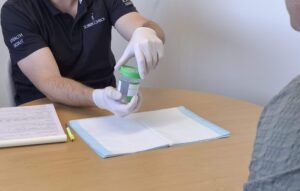
Here’s something that happens more often than it should:

An employer in Queensland or WA receives a positive drug test result for a safety-critical worker, moves to stand them down, and then discovers (when the worker challenges the decision) that the testing programme they’ve been running for three years doesn’t actually comply with the relevant Australian standard.

The result may be given significantly less weight or be challenged because the employer cannot demonstrate that the testing process complied with recognised procedures. The worker stays, and the employer has just learned a very expensive lesson about the difference between having a testing programme and having a compliant one.

That gap (as in between going through the motions and actually doing this properly) is what this overview is about. 

What is Workplace Drug Testing?

At its core, workplace drug and alcohol testing is about managing the safety risk that substance use (and/or abuse) creates, and looking after the health and well-being of all staff.

One important point to understand from the outset is that workplace drug testing generally measures drug exposure rather than impairment. The period over which drug exposure can be detected varies depending on the specimen type used. Test results should always be interpreted alongside the workplace policy, the circumstances of the test and any applicable legislation. 

That sounds straightforward. But in practice, it actually sits inside a broader legal and operational framework that a surprising number of businesses haven’t thought through carefully.

The testing itself is one piece. The policy that defines what’s prohibited and what happens when someone tests positive is another thing entirely. 

Another is the training that equips supervisors to identify potential impairment and initiate a reasonable cause test. The chain-of-custody documentation that makes a result defensible if it ends up before the Fair Work Commission is another issue. Pull any one of those pieces out and the programme has a hole in it. Consent plays a critical role in this from an employee standpoint 

Where urine drug testing is used, the technical benchmark in Australia is AS/NZS 4308:2023, which is the Australian and New Zealand urine standard updated in 2023 after fifteen years on the 2008 version. 

It sets the cut-off concentrations for screening, defines when a result is considered not-negative, establishes specimen collection procedures, outlines laboratory requirements and details the chain of custody processes needed to maintain the integrity of a result. 

Legal Requirements by State

One of the things that catches Australian employers off guard is discovering that drug and alcohol testing compliance doesn’t look the same in every state:

Western Australia

If there’s a state in Australia where employers have genuinely internalised the idea that drug and alcohol testing is non-negotiable, it’s WA. 

The resources sector here dominates the entire conversation and the Mines Safety and Inspection Act 1994 and the Work Health and Safety (Mines) Regulations 2022 along with the Work Health and Safety Act 2020 (WA) create a framework where fitness for work programmes are a core requirement of this critical sector. 

For any business contracting into WA mining, oil and gas or resources operations, a compliant testing programme is typically a contractual condition before a single worker mobilises to site. 

Principal contractors don’t wait to be asked. They require demonstrated compliance upfront. Pre-employment testing, random testing, post-incident testing, and reasonable cause testing together constitute the full suite. 

Queensland

Queensland’s resources sector operates under the Coal Mining Safety and Health Act 1999 and the Mining and Quarrying Safety and Health Act 1999, with Resources Safety and Health Queensland overseeing compliance. 

Fitness-for-work requirements (which, yes, include systematic drug and alcohol testing) are embedded in the safety and health management system obligations that mine operators must maintain.

Outside the resources sector, Queensland employers are operating under the Work Health and Safety Act 2011 (Qld) and the general duty to manage impairment risks. Construction and transport businesses in Queensland increasingly find that major project requirements effectively mandate a testing programme, whether the base legislation requires one or not. 

Principal contractors specify it as a site condition and businesses that can’t demonstrate a compliant programme don’t get on-site.

New South Wales

NSW adopted the model WHS legislation, with SafeWork NSW administering it. Drug testing is often mandatory or legally justified under the Work Health and Safety Act 2011 (NSW), which obliges employers – known as Persons Conducting a Business or Undertaking (PCBUs) – to manage safety risks, including impairment. 

What NSW does have, however, is a significant body of Fair Work Commission case law around drug testing and dismissal. NSW employers have been through a lot of contested termination cases involving positive drug tests. We see a pattern emerging from case law that is consistent: Fair Work decisions consistently consider whether employers followed their own policy, used a fair process and were able to demonstrate the integrity of the testing process. 

Victoria

Victoria kept its own legislation; the Occupational Health and Safety Act 2004 (Vic). This was when most other states adopted the harmonised model WHS Act.

The practical obligations around impairment risk management are similar, but the regulatory culture has its own characteristics too. For instance, large construction projects in Victoria operate under enterprise agreements that have historically included specific procedural requirements around testing that go beyond the regulatory minimum. 

For Victorian construction employers, that means the industrial instrument sitting over their workforce can impose requirements around how testing is conducted, who can administer it and how results are handled that aren’t immediately obvious from reading the OHS Act alone. 

South Australia

South Australian employers use workplace drug and alcohol testing as one of a number of controls to manage impairment risks under Work Health and Safety Act 2012 (SA). Whether testing is appropriate depends on the risks within the workplace, but where testing is introduced it should be supported by clear policies and procedures and carried out in accordance with the relevant Australian Standards.

Tasmania 

In Tasmania, workplace drug and alcohol testing is used as one of several controls to manage impairment risks under the Work Health and Safety Act 2012 (Tas).  Testing should form part of a broader workplace health and safety programme that includes clear policies, worker education, supervisor training and appropriate support for employees where required.

Like the rest of Australia, testing should be proportionate to the workplace risks and developed in consultation with workers. Employers should also recognise that most drug testing identifies drug exposure rather than impairment and should ensure policies clearly explain how test results will be interpreted and managed.

For more detailed guidance, refer to the official WorkSafe Tasmania standards on managing drugs and alcohol.

Australian Capital Territory 

In the Australian Capital Territory, workplace drug and alcohol testing is governed by the Work Health and Safety Act 2011, which places the onus on employers to manage safety risks.  Testing should be proportionate to the workplace risks and supported by consultation with workers. ACT employers in high-risk industries such as construction and transport frequently implement testing regimes as a critical safety control. To remain compliant, these policies must be developed in genuine consultation with workers and must clearly demonstrate that the testing is a necessary measure to ensure a safe working environment. For a deeper understanding of these obligations, you can review the ACT Work Health and Safety standards and employer guidelines.

Northern Territory 

In the Northern Territory, workplace drug and alcohol testing is underpinned by the Work Health and Safety (National Uniform Legislation) Act 2011, which requires a Person Conducting a Business or Undertaking (PCBU) to eliminate or minimise risks to health and safety so far as is reasonably practicable. The WHS Act section 19 establishes a clear duty of care for employers to manage impairment risks, particularly in safety-critical sectors such as mining and transport. 

Mining, construction, transport and remote operations commonly implement workplace drug and alcohol testing as part of their fitness for work programmes. As with other jurisdictions, employers should ensure testing is supported by documented policies, appropriate consultation and recognised Australian Standards.

Workplace Drug Testing Methods 

The choice of testing method shapes everything from what the programme can actually detect to how collections are conducted in the field: 

Urine Testing (AS/NZS 4308:2023)

Urine testing remains the most widely used workplace drug testing method in Australia and is the primary specimen type covered in AS/NZS 4308:2023. Workplace drug testing detects drug exposure rather than impairment. This distinction is important when developing workplace policies and interpreting results. 

The detection window is longer than oral fluid (cannabis metabolites can show up in urine for days to weeks, depending on frequency of use, for instance), which alone makes urine testing effective for identifying historical use rather than just recent impairment. 

Laboratory confirmation of not-negative screening results is required, and the chain-of-custody requirements for urine specimen collection are detailed and non-negotiable for a defensible result.

AS/NZS 4308:2023: specimen collection, detection and quantification of drugs in urine. 

Oral Fluid Testing (AS/NZS 4760:2019)

Saliva testing has grown substantially in workplace use because it solves the practical problems that urine testing creates in field environments. No bathroom facilities are required, it is less invasive and results are available quickly on-site. 

The detection window is shorter, which is actually an advantage when the goal is identifying recent use, rather than whether someone smoked cannabis at a weekend party three weeks ago.

The devices used for oral fluid screening must meet the performance criteria in AS/NZS 4760:2019, and a not-negative screening result should be sent for laboratory confirmation in accordance with AS/NZS 4760:2019 and workplace policy. 

AS/NZS 4760:2019: specimen collection and detection of drugs in oral fluid. 

Breath Alcohol Testing (AS 3547:2019)

Breath alcohol testing is commonly conducted alongside drug testing as part of a workplace drug and alcohol programme, but it operates differently from urine or oral fluid drug testing.

AS 3547:2019 relates to the performance of breath alcohol testing devices rather than prescribing the complete workplace testing procedure. Employers should therefore ensure they are using a workplace breathalyser that meets the relevant requirements of AS 3547:2019, while also having clear procedures covering how alcohol testing is conducted, documented and managed.

Collector competency is another important consideration. The current Australian unit of competency, HLTPAT010: Collect specimens for drugs of abuse testing, covers the skills and knowledge required to conduct urine, oral fluid and breath testing. It includes preparing for collection, following appropriate procedures, maintaining documentation and chain of custody, and using compliant equipment.

Breathalysers need to be properly calibrated and maintained, with the administration procedure followed correctly to produce a reliable result. 

Alcohol continues to be one of the most common causes of impairment in Australian workplaces as a primary ‘drug of choice’, so if a drug testing programme doesn’t also address alcohol, it has a significant gap.

AS 3547:2019: performance requirements for breath alcohol testing devices. 

Collector competency: HLTPAT010 – Collect specimens for drugs of abuse testing. the current Australian unit covering urine, oral fluid and breath collection/testing.

How to Implement a Workplace Testing Programme

The businesses that end up in trouble with their testing programmes are almost never the ones that deliberately cut corners. They’re usually the ones who bought a testing kit, wrote a policy based on something they found online, and assumed that was enough. 

A defensible programme starts with policies and procedures that have actually been written with the intent of managing the risks associated with drug and alcohol use in the workplace (not a generic template) that clearly define how these risks are controlled. These are some of the types of elements to be considered based on guidelines from SafeWork NSW. 

  • Develop clear policies and procedures relating to alcohol and other drugs in the workplace. 
  • Train managers and supervisors to identify signs of impairment and the appropriate action to take.
  • Educate workers on the risks associated with alcohol and drug use. This could include recognising signs of impairment and how to report concerns within the workplace.
  • Manage psychosocial hazards and risks that could contribute to alcohol or drug use. For example, managing high workloads.
  • Develop clear policies and procedures relating to the PCBUs response to others being impaired and creating risks in the workplace. For example, managing members of the public demonstrating signs of impairment.
  • Develop an alcohol and drug testing programme such as random testing, pre-employment testing and post-incident testing (ensuring you also comply with privacy and other laws). If testing is being considered as a control measure, legal advice may be required.

Every worker needs to have read it, understood it as well as sign something that documents that understanding.

One more thing: collector qualifications matter more than most employers appreciate. Under AS/NZS 4308:2023, collectors need to meet competency requirements. An unqualified person who’s following the instructions on a testing kit is not a compliant collector, and that distinction is going to become very important when a result is challenged. Competency should also be maintained through ongoing training and regular assessment.

Why Quality Control Matters 

One of the biggest changes introduced by AS/NZS 4308:2023 is the requirement for ongoing quality control of on-site urine drug testing devices.

Employers conducting on-site testing are expected to verify device performance through routine high and low control testing, maintain documented quality records and have procedures for managing failed quality control events.

This represents a significant shift from simply purchasing compliant testing devices to actively demonstrating that those devices continue to perform correctly throughout their use.

For workplaces managing their own testing programme, quality control is now an essential part of maintaining compliance rather than an optional extra.

Choosing the Right Workplace Drug Testing Solution

When implementing a workplace drug and alcohol testing programme, employers generally have two options: manage testing in-house or engage a third-party testing provider. The right approach depends on the size of the organisation, the number of tests conducted each year, available resources and operational requirements.

In-house Workplace Testing

Many organisations choose to manage drug and alcohol testing internally because it provides greater flexibility, faster response times and can significantly reduce ongoing testing costs. Instead of paying call-out fees and service charges for every test, organisations invest in compliant testing devices and train their own personnel to carry out testing when and where it is needed.

An effective in-house programme relies on more than selecting the right testing devices. Employers also need documented procedures, compliant chain-of-custody processes, quality control measures and staff who are confident using the equipment correctly.

Sober Check Australia supports organisations implementing in-house testing programmes by supplying compliant drug and alcohol testing devices, providing product training, assisting with testing procedures and offering ongoing technical support to help workplaces build a programme that aligns with the relevant Australian Standards.

Third-Party Testing Services

For organisations that don’t have the resources or desire to conduct testing internally, a third-party provider may be the preferred option. While this generally involves a higher ongoing cost and may not provide the same immediate response as an in-house programme, employers are paying for the convenience of experienced collectors managing the testing process.

When selecting a third-party provider, employers should ensure they operate in accordance with the relevant Australian Standards, use appropriately trained collectors, maintain documented chain-of-custody procedures and utilise NATA-accredited laboratories for confirmatory testing where required.

Finding the Right Partner

Whether you’re introducing an in-house programme or reviewing your current approach, it’s important to work with a provider who understands the practical requirements of Australian workplaces.

Sober Check Australia supports organisations across all Australian states and territories with compliant drug and alcohol testing products, product training, technical advice and practical guidance to help workplaces implement effective testing programmes.

If it’s time to establish a workplace drug and alcohol testing programme (or review whether your current programme meets today’s standards) our team is here to help.

Get in touch today to discuss the best solution for your workplace.
by Becks Stratton

A Sober Check Guide to Australian Workplace Drug & Alcohol Policy

Let’s be honest about something; most workplace drug and alcohol policies are terrible. 

Not terrible in a dramatic or even in a legally explosive way, but nonetheless terrible in the way that makes experienced HR managers quietly cringe. They’re copy-pasted from somewhere on the internet, stuffed with language nobody actually speaks and then they’re filed away in a shared drive that hasn’t been opened since the document was created. 

Half the workforce doesn’t even know the policy exists and the other half signed something at induction and immediately forgot about it!

Then something happens on site. Someone turns up clearly impaired. A post-incident test comes back positive. A manager has to make a call in real time, under pressure and in front of other workers… and there’s no clear procedure to follow because the policy is either non-existent, out of date or written so vaguely it could mean almost anything.

That’s the gap this guide is designed to close. Not just having a policy, but having one that actually does something.

Why Every Workplace Needs a Drug and Alcohol Policy (A Real One)

Safe Work Australia is pretty unambiguous on this point. Managing impairment risk is part of an employer’s primary duty of care under work health and safety legislation of the relevant state or territory. State regulations also provide practical guidance, such as the Queensland Government’s guidance on managing alcohol and other drugs in the workplace (here is the Queensland government’s guidance on this).  

The obligation isn’t to have a document. It’s to identify the hazard, assess the risk and to put controls in place. A written policy is the foundation of that.

What is surprising for a lot of employers is the fact that not having a policy isn’t simply a gap in compliance, it is a potential liability for your business or organisation. If a worker is injured and there’s no documented policy, no testing procedure and no evidence that the organisation took the risk seriously, this could become an important consideration during a  WorkSafe or workers’ compensation investigation, depending on the circumstances.  

And without a written and properly implemented framework, every situation becomes a discretionary call made by whoever happens to be the supervisor on the day. Two workers, same behaviour, different managers, completely different outcomes. That’s how discrimination claims start. That’s how unfair dismissal cases get traction. A consistent approach provides protection for employers and employees alike.  

For anyone who’s in construction, mining, transport or utilities, a drug and alcohol policy isn’t optional at all. Principal contractors routinely require subcontractors to have one before a worker sets foot on site. Some federal and state regulatory frameworks make it a condition of operating. 

Scope That Covers Everyone: What Do Policies Typically Include

The policy has to be clear about who it applies to and the answer should be everyone. Full-time staff, casuals, contractors, labour hire workers and in some circumstances, visitors. 

Policies that only technically cover direct employees tend to develop gaps exactly where the risk is highest, simply because in a lot of Australian workplaces, a significant portion of the workforce isn’t on a direct employment contract.

The policy should also identify who is responsible for implementing it, including managers, supervisors, contractors, workers and any third-party providers involved in testing.

The Prescription Medication Problem

Most policies either ignore this entirely or handle it so awkwardly that it creates more confusion than clarity. 

But here’s the practical reality; workers have a right to privacy around their medical treatment, but they also have a safety obligation. Someone who is operating a forklift while taking a medication that causes significant drowsiness is a hazard, regardless of whether the medication is legal and legitimately prescribed.

A workable policy creates a confidential disclosure process. Workers notify a nominated person (typically HR or an occupational health contact) and not their direct supervisor. The conversation is about managing the safety risk and not interrogating someone’s medical history. 

Reasonable adjustments might be available. The goal is to keep the person safe and keep them working, not to punish someone for having a health condition.

The same principles may also apply to over the counter medications that have the potential to impair a person’s ability to work safely.

Cut-Off Levels That Match the Standard

This is the technical piece that many policy templates skip over; however, it matters enormously. If the workplace conducts testing (more on that below), the cut-off concentrations in the policy need to align with AS/NZS 4308:2023 for urine testing and AS/NZS 4760:2019 if they are doing oral fluid testing. Where breathalysers are used, they should comply with AS 3547:2019 (Breath Alcohol Testing Devices).

If a workplace policy references outdated standards, it should be reviewed and updated. Policies don’t need to reproduce the technical requirements contained within the standard, but they should reference the current versions and ensure workplace procedures align with them.

Testing (When, How and What Happens Next)

The policy needs to spell out the testing framework in plain language. What triggers a test? Pre-employment screening, random testing, reasonable cause and post-incident testing…each is a different situation with a different process, so the policy should address them separately.

Random testing, in particular, is an area where vague policy language causes real operational headaches. “Random testing may be conducted from time to time” is not a testing programme. 

A defensible random testing framework should specify the selection methodology, frequency of testing, who administers the tests, which devices are used and how a not-negative screening result is managed pending laboratory confirmation. 

Getting this right in the policy document is exactly what allows the employer to act decisively if a positive result comes back.

The policy should also explain how confirmatory laboratory testing is managed following a not-negative screening result and who is responsible for communicating the outcomes.

Consequences That Are Actually Proportionate

Here’s where a lot of policies over-correct in one direction or the other. 

A proportionate framework usually looks something like this: a confirmed positive in a safety-critical role (operating machinery, driving, working at height) has more immediate consequences than the same result in a low-risk role. 

First confirmed positive for someone without a prior history looks different from a repeat occurrence. Many workplace policies treat an unjustified refusal to participate in testing as a serious breach of the policy. Exactly how this is managed should be clearly explained within the policy and be consistent with employment obligations and applicable legislation. 

And somewhere in that framework, there needs to be a genuine pathway to support. Not as a get-out-of-jail-free card, but as a recognition that alcohol and drug dependency are health issues. An EAP referral, access to counselling and a return-to-work process aren’t soft options. They’re often what actually resolves the underlying problem rather than just removing the person from the immediate situation.

Managers and Supervisor Responsibilities

This section is missing from a lot of policies entirely and it’s arguably the most important operational piece. A manager who suspects a worker is impaired needs to know exactly what to do. 

That means: how to document observations in the moment (specific, behavioural, objective…not “seemed off”), how to remove the person from safety-critical duties without creating a confrontation in front of the team, who to call, how to initiate a reasonable cause test and what to do with the worker while results are being processed. 

Managers who don’t have this clarity either do nothing (because acting feels too complicated) or they otherwise improvise in ways that create procedural problems down the track.

Supervisor training isn’t optional if the policy is going to function in practice. The document can be perfect and the programme still fails if the people responsible for applying it aren’t equipped to do it.

What Should a Workplace Drug and Alcohol Policy Include?

Building a policy from scratch with all of the above in mind takes time and a reasonable amount of expertise. 

For most businesses, a well-constructed template is the smarter starting point, which is something that covers the key components correctly.  It needs to include guidance notes to help adapt the language to the specific workplace and doesn’t require starting from a blank page at eleven o’clock on a Sunday night before a new principal contractor requirement kicks in Monday morning.

When developing a Workplace Drug and Alcohol policy, it is recommended to consult Safe Work Australia’s guidance, the AS/NZS 4308:2023 and AS/NZS 4760:2019 standards, and any other applicable laws and standards, such as Privacy Acts and WHS requirements. This is to ensure it is actually usable rather than merely technically compliant.

In most Australian jurisdictions, employers also have obligations to consult with workers when introducing or changing workplace health and safety measures. Consulting employees during the development or review of a drug and alcohol policy not only helps meet WHS obligations but also improves understanding and acceptance of the programme.

A well-developed workplace drug and alcohol policy should clearly explain:

  • why the organisation has implemented the policy
  • who it applies to
  • the roles and responsibilities of workers, supervisors and managers
  • when testing may occur
  • the testing methods used
  • how results will be managed
  • the support available to employees
  • how and when the policy will be reviewed.

The level of detail will vary between organisations, but every policy should provide enough information that workers understand both their responsibilities and the organisation’s expectations.

Turning the Policy Into a Working Programme

A document in a shared drive is not a drug and alcohol programme. This is perhaps the most important thing to understand about where policies fail (and they do fail, regularly in workplaces that have technically ticked the box!).

Making it real means communicating it properly. Not just emailing a PDF. But actually covering it in toolbox talks and including it in inductions in a way that actually lands and not just a signature on a form. Making sure every worker genuinely understands what’s expected and what the consequences are.

It means having the testing programme in place before the policy references it. A policy that says “random testing is conducted in accordance with AS/NZS 4308:2023”, but the business has no testing provider, no compliant devices and no chain of custody procedure is going to have a very bad day the first time someone challenges a result.

And it means reviewing the policy on a real cycle. You should do this at least annually and whenever something significant changes. This is because legislation gets updated. Standards also change (as AS/NZS 4308 did in 2023). The workplace itself evolves, and a policy written for a team of eight looks pretty thin when the business has grown to sixty people with three subcontractors on site.

Where organisations conduct their own in-house urine drug testing, the programme should include documented testing procedures, product training, quality control processes and regular reviews to ensure ongoing compliance with the relevant Australian Standards.

Under AS/NZS 4308:2023, organisations conducting on-site urine drug testing should also have documented quality control procedures to verify ongoing device performance. Quality control is now an important component of maintaining a compliant workplace testing programme.

Does your Workplace Drug and Alcohol Policy Include? 

  • Purpose and objectives
  • Scope (employees, contractors and visitors)
  • Roles and responsibilities
  • Prescription medication disclosure
  • Testing circumstances
  • Testing methods
  • Australian Standards referenced
  • Chain of custody procedures
  • Consequences and support pathways
  • Manager responsibilities
  • Review process

How Sober Check Supports Australian Workplaces 

Developing a workplace drug and alcohol policy is only the first step. Successfully implementing it requires the right testing solution, documented procedures and people who understand how the programme operates in practice.

Sober Check Australia helps organisations build practical workplace testing programmes by supplying compliant workplace drug and alcohol testing solutions including testing devices, product training, assistance with testing procedures and ongoing technical support.

Whether you’re developing a new workplace drug and alcohol policy, reviewing an existing programme or preparing for the requirements of AS/NZS 4308:2023, our team can help you choose a solution that’s practical, compliant and suited to your workplace.

Talk to the Sober Check team today to discuss the right approach for your workplace. 

by Becks Stratton

Australian Standards for Urine Drug Testing: AS/NZS 4308:2023 Guide

There’s a deadline approaching that many Australian employers don’t yet know about, and those who miss it will find themselves in a very uncomfortable position. 

By November 2026, every workplace urine drug testing programme in Australia will need to meet the updated requirements under the AS/NZS 4308:2023.  The standard is officially called: Procedures for Specimen Collection and the Detection and Quantification of Drugs in Urine. 

It doesn’t matter whether the workplace runs mining operations in Western Australia, a logistics fleet in Queensland or a construction site in Victoria.  Drug testing compliance in Australia just got a significant update and understanding what has changed isn’t exactly optional anymore. 

This guide helps to break it all down.

What Changed from AS/NZS 4308:2008 to 2023

The AS/NZS 4308 standard had been around since 1995, originally published as AS 4308-1995 and Australian workplaces built their drug-testing programmes around it. In 2001, it was revised and jointly designated as AS/NZS 4308:2001. In 2008, it was updated as AS/NZS 4308:2008, which introduced provisions for on-site screening. In 2023, the standard was updated to AS/NZS 4308:2023. It included a 36-month rollover period before the 2008 standard was to be superseded.  This gives everyone involved in the process time to update policies, procedures and products.

The AS/NZS 4308:2023 standard enhances workplace drug testing by lowering cut-off levels for cocaine and updating reporting terminology to “not-negative.” Science has moved forward, substances have evolved and the 2008 standard simply couldn’t keep pace with what employers were actually dealing with on-site, in the real world. 

The 2023 revision, however, brought the standard into the modern era across several key areas:

The scope of substances screened for was only slightly altered (with only cocaine changing). The updated standard now better accounts for the realities of contemporary drug use with some of the key findings below:

  • There is a whole new appendix dedicated to Additional and optional testing – Appendix A, which covers Additional and optional testing, including setting a cut-off level for Oxycodone if it is included in a screening test.
  • Cut-off levels for specific drugs and compounds, depending if you are using:
    • immunoassay – a biochemical test that measures the presence or concentration of a substance (analyte), including drugs, in biological samples using the specific binding between an antigen and an antibody
      or 
    • mass-spec screening – a highly specific analytical technique used to detect and quantify compounds, such as drugs, by sorting ions based on their mass-to-charge ratio.
  • It also gives a list of examples of drugs that can be tested for in consultation with a lab, such as Fentanyl and Synthetic Cannabinoids.

Collector training and competency requirements also saw meaningful updates. The standard places a strong emphasis on the qualifications of the people who are actually administering collections, not just on the labs that process the samples. That’s a change that matters a lot for employers who are increasingly relying on on-site testing programmes.

Point-of-care testing devices (such as rapid on-site screening kits) are addressed with greater specificity than before. The criteria for acceptable devices, their proper use and the handling of results have all been clarified. This should be genuinely helpful for anyone trying to run a compliant on-site programme.

Stronger Quality Control Requirements for On-Site Testing

One of the biggest operational changes introduced in AS/NZS 4308:2023 is the increased emphasis on quality control for on-site urine drug screening.

Under the previous 2008 standard, much of the quality assurance focus sat with accredited laboratories. The 2023 standard places greater responsibility on organisations that conduct workplace testing themselves by introducing defined quality-control procedures for on-site screening devices and for creatinine measurement.

This means employers can no longer simply purchase compliant urine drug testing devices and assume they remain compliant throughout their shelf life. 

The testing programme itself must demonstrate that devices continue to perform as intended. The new quality control requirements include:

  • High-and low-control samples must be tested before a new lot of on-site drug-screening or creatinine-testing devices is put into service.
  • Ongoing high- and low-control testing must then be performed at least monthly for every lot of devices held in storage.
  • All quality control results must be documented and retained as part of the organisation’s quality records.
  • If a control test fails, the affected lot must be investigated and, where necessary, withdrawn from service until satisfactory performance has been demonstrated.
  • Organisations must also have documented procedures describing how quality control failures are managed and how the integrity of previous test results will be assessed if a failure occurs.

The standard also encourages participation in ongoing proficiency or blind testing programmes. These independently verify that collectors, devices and on-site testing processes continue to produce reliable and repeatable results over time rather than simply relying on manufacturer specifications.

For employers running their own workplace testing programme, this represents a significant shift. Compliance is no longer just about using the right urine cup or following the correct collection procedure. It now includes maintaining documented evidence that the testing devices themselves continue to perform accurately throughout their use.

New Cut-Off Levels and Detection Windows

Cut-off levels are the concentration thresholds that determine whether a sample returns a not-negative or negative result. Get them wrong (or use outdated thresholds) and the whole testing programme is built on shaky ground.

AS/NZS 4308:2023 has seen the following key changes implemented: 

Key Changes in Cut-offs (2008 vs. 2023):

  • Cocaine Metabolites: Screening reduced from 300 ng/mL to 150 ng/mL. Confirmation dropped from 150 ng/mL to 100 ng/mL.
  • Benzodiazepines: Screening remains at 200 ng/mL, but the confirmation cut-off for metabolites (Nordiazepam, Oxazepam, Temazepam) has been revised to improve accuracy and reduce false positives.
  • Opiates, Amphetamines and THC: Cut-off levels for these substances remain consistent with the 2008 standard.

These changes across the substance classes are to better align with both current pharmacological understanding and international best practice. This matters in practice because a test calibrated to old thresholds might clear someone who shouldn’t be cleared or flag someone who shouldn’t be flagged.

Cannabis remains the most commonly detected substance in Australian workplace urine testing. Detection windows vary based on factors such as frequency of use, body composition, and the type of specimen collected. On that last note, urine is the most common specimen. 

For amphetamines (including methamphetamine), the cut-off levels have not changed. The standard specifically states that it applies only to exposure, not to impairment.

Cocaine and some specific analytes for other drug classes have updated cut-off levels under the 2023 standard. If you want to test for compounds outside the ‘standard six’ (opiates, amphetamines, methamphetamine, cocaine, benzos & THC), you can use extended panel testing, such as a dip test; however, the standard notes that it should be done in consultation with a laboratory that can provide advice on what levels are consistent or inconsistent.

Any testing programme still operating off 2008 cut-off numbers needs to be updated immediately. 

Not in November 2026, but now.

What is Creatinine?

Creatinine is a naturally occurring chemical waste product generated by muscle metabolism and filtered exclusively by the kidneys, which excrete it into urine. In a healthy human body, muscle mass and kidney function remain relatively stable day-to-day, so creatinine concentrations in normal urine remain within a highly predictable, consistent baseline range.

Why is it a Critical Focus in Workplace Drug Testing?

In the context of workplace drug screening, creatinine is not tracked to detect substance abuse; instead, it is utilised as the ultimate gauge of sample validity and donor integrity.

Because it is an unavoidable biological signature of human urine, tracking creatinine allows testing officers to immediately identify if a donor is attempting to cheat or tamper with the test.

Testing panels look for two major red flags:

  • The Absence of Creatinine (Low Readings): An abnormally low or completely absent creatinine reading indicates that the sample is not a natural human specimen. It instantly flags that the donor has either substituted their sample with synthetic “fake urine” or has consumed extreme volumes of water to flush and dilute their system below the readable drug thresholds.
  • Spiked Concentrations (High Readings): Conversely, an unnaturally elevated or concentrated creatinine reading suggests that it might be a heavily diluted or altered sample. 

The AS/NZS 4308:2023 Enforcement

While modern urine cups utilise a matrix of integrity checks – including pH scales, specific gravity, and temperature strips (which have been expanded under the 2023 standard to read from 32°C to 38°C) – the new standard singles out creatinine for rigorous enforcement.

Under the AS/NZS 4308:2023 regulations, creatinine testing panels can no longer be passive add-ons. Manufacturers must be able to demonstrate that their devices have been independently verified as fit for purpose in accordance with Appendix B of AS/NZS 4308:2023. In addition, organisations conducting on-site testing must now perform ongoing high and low creatinine quality control testing to verify continued device performance. 

Chain of Custody Requirements

Chain of custody is where a lot of well-intentioned drug testing programmes quietly fall apart. It sounds like a legal formality, but it’s actually the backbone of any defensible result. 

If a positive test ever ends up in a Fair Work Commission hearing or an internal dispute process, chain-of-custody documentation is what makes or breaks the case.

AS/NZS 4308:2023 reinforces and clarifies the chain of custody requirements present in the 2008 standard, with greater specificity regarding documentation, handling and transfer procedures.

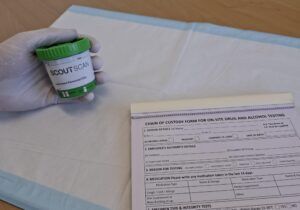
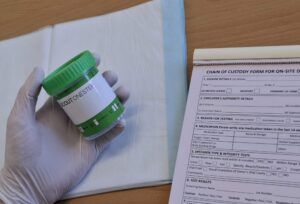
From the moment a specimen is collected, every step needs to be documented. Who collected it, when, reason for testing, unique donor identifiers, screening results (if the sample is screened), and donor acknowledgement that the sample is theirs. All of it needs to be traceable without gaps. 

The standard specifies the use of tamper-evident specimen containers and requires that chain-of-custody forms accompany specimens throughout the process.

For on-site testing, chain-of-custody requirements also apply to the screening process. A not-negative screening result that isn’t properly documented and handled in accordance with the standard cannot be relied upon if challenged. 

That’s a very real risk for employers who treat on-site testing as a quick, informal process rather than a documented procedure. Laboratories may also refuse to run tests on samples that do not meet the chain-of-custody protocol. 

Employer Compliance Checklist

Getting compliant with AS/NZS 4308:2023 isn’t a job to put aside for an afternoon; however, it is absolutely manageable with the right roadmap.

Here’s what every employer should be working through before that November 2026 deadline:

  • Review and update the workplace drug and alcohol policy: The policy needs to reference the current standard, not the 2008 version. If the document still cites AS/NZS 4308:2008, it needs to be updated.
  • Audit current testing procedures against the 2023 requirements: Cut-off levels, collection procedures and documentation practices are all ways to compare what’s happening on the ground with what the standard actually requires.
  • Verify laboratory accreditation: Confirming that the laboratory processing the tests holds current NATA accreditation under the updated standard is non-negotiable.
  • Check the collector’s qualifications and training: The people administering collections need to meet the competency requirements outlined in the 2023 standard. Review their credentials and identify any gaps.
  • Review on-site testing device compliance: If rapid on-site screening devices are part of the programme, confirm they meet the performance criteria specified in AS/NZS 4308:2023.
  • Update chain-of-custody documentation: The forms, procedures and handling practices will all need to align with the current standard’s requirements.
  • Train managers and supervisors: The people making reasonable-cause testing decisions need to understand what the updated standard means for their roles.
  • Implement an onsite quality control programme: If your organisation conducts on-site urine drug testing, ensure routine high and low control testing, lot verification, documentation and quality control procedures comply with AS/NZS 4308:2023.

What Happens If You’re Not Compliant by the November 2026 Deadline

Here’s the uncomfortable part. A drug testing programme that doesn’t comply with AS/NZS 4308:2023 after the November 2026 deadline isn’t just technically out of date. It also creates genuine legal and operational exposure.

In safety-critical industries where drug testing is a regulatory requirement, non-compliant testing procedures can undermine the legal defensibility of results. An employee who is dismissed following a positive result from a non-compliant test has very real grounds to challenge that outcome. And, depending on the industry and jurisdiction, there may also be direct regulatory consequences for organisations whose safety management systems reference testing standards they don’t actually meet.

Beyond the legal risk, there’s a practical safety argument. The 2023 standard exists because the 2008 standard wasn’t keeping pace with the actual landscape of workplace drug use. Operating under outdated cut-offs and procedures means the testing programme may not catch what it’s supposed to. It’s not necessarily drugs at the workplace; it’s about not being at work while impaired, thereby increasing the risk of an unsafe work environment.  That’s a risk that ultimately shows up as workplace incidents, not compliance notices.

The November 2026 deadline feels like it’s a long way off. It isn’t. Updating a workplace drug testing programme (and especially in a large organisation) takes time. Policy reviews, supplier conversations, staff training and documentation overhauls are each significant processes.  Getting each process underway now is the move that makes the deadline feel manageable. 

Leaving it for late 2026 is precisely a move that could make it feel like a crisis!

Are you ready to make sure your workplace drug testing programme meets every requirement under AS/NZS 4308:2023? 

The team at Sober Check Australia are built for exactly this, walking employers through the updated standard, identifying gaps in current programmes and putting a clear path to compliance in place before the deadline arrives. 

Get in touch with the team today to learn how we can help get your testing programme in place. 

by Becks Stratton

A Message from Louis Foster, CEO of Sober Check Australia

As many will be aware, Sober Check, New Zealand’s largest supplier of certified drug and alcohol testing solutions, acquired CMM Technology in 2025. Over the past twelve months, we have been working behind the scenes to bring together the best of both organisations. Today, I am pleased to confirm that CMM Technology will now operate under the Sober Check Australia brand.

I want to be direct about what this means for you: nothing changes on your end. Your contracts, pricing, payment arrangements and day-to-day service contacts all remain exactly as they are. There is no action required from you. No new paperwork, no updated payment details, no disruption accessing your drug and alcohol screening devices. You’ll still receive the same excellent service and support from the same team.

Why the Rebrand?

For over 20 years, Sober Check has built a reputation in New Zealand as one of the most trusted names in workplace drug and alcohol testing. We have earned that reputation the same way CMM earned yours: through reliable service, strong relationships and a genuine understanding of what our clients need to keep their people safe.

The rebrand to Sober Check Australia reflects a single, unified identity across both sides of the Tasman. It gives us the platform to invest more deeply in the Australian market, including expanded national coverage, updated equipment and technology and a stronger team on the ground.

As I shared in a recent Q&A on our website, our internal purpose at Sober Check is simple: Helping People Help People. That is what drives every decision we make. We provide the tools and services that allow site managers to keep their teams safe, help recruitment consultants place workers with confidence and support clinical practitioners in guiding individuals back to wellbeing. That purpose does not change with a new name. 

What Stays the Same

  • Contracts and pricing. No changes to existing agreements.
  • Payment arrangements. ABN, bank details and billing processes remain the same.
  • Account contacts. The team will continue to manage your account.
  • Equipment, devices and consumables. Same products, same quality, same certifications.
  • Compliance obligations. We continue to supply products and services that meet the current standards and all relevant state and territory WHS requirements.

What Gets Better

The Sober Check name brings with it the resources, systems and experience of a business that has spent two decades refining its approach. Here is what can be expected:

Pro-active account management. In New Zealand, Sober Check built its market leadership through a customer-first model. Rather than waiting for you to call us when something goes wrong, we come to you. Expect regular check-ins, compliance reviews and recommendations tailored to your site and sector.

National reach. CMM’s strength has always been in Western Australia, with deep ties to the mining sector. Under Sober Check Australia, we are expanding our operational footprint across Queensland, New South Wales, South Australia and Victoria, before moving to the rest of the country. If your business operates across multiple states, we can now support you nationwide under a single account.

Broader product range. This range includes an extensive array of Sober Check’s industry-leading products across the spectrum of alcohol, hydration, urine drug, oral fluid drug testing, as well as wellness, specialty products and client product training. 

Technology and digital engagement. We are also making investments in technology and digital engagement. The way Australian businesses manage workplace safety is evolving. Our investment in digital tools, streamlined ordering and faster turnaround times is designed to make your experience with us as straightforward as possible.

Our Vision for the Australian Market

When Sober Check identified CMM Technology as the foundation for our Australian expansion, it was due to CMM’s loyal client base and the relationships it had built over the years. Those relationships are the assets we valued most in this acquisition, and they are the ones we intend to continue to support.

Our goal is clear: to make Sober Check Australia the preferred partner for employers, workplaces and organisations across Australasia who need reliable, compliant, high-quality workplace testing solutions. As I have said before, we know that genuine and timely service works. Our plan is to combine the technical expertise and proven model we have developed in New Zealand with the established trust CMM has earned in Western Australia, and to extend that combination nationally.

What You Need to Know

There is no action required from you from an operational perspective. Your service will continue uninterrupted. Your existing agreements, payment arrangements and account contacts all remain the same.

Over the coming weeks, you will begin to see the Sober Check brand across our emails, website, invoices and communications. While our existing email addresses will continue to work during the transition, we encourage you to add the new domain to your safe senders list to ensure ongoing delivery of communications.

We also invite you to have a look around our website and follow Sober Check Australia on LinkedIn for updates, workplace safety insights, product information and training resources.

If you have any questions at all, your existing account manager is your first point of contact, or you are welcome to reach out to me directly.

I look forward to continuing to work together to help keep workplaces and communities safe across Australia.

Warm regards

Louis Foster

CEO, Sober Check Australia

by Becks Stratton

Leading Workplace Drug Testing Provider Sober Check at AddictionZ 2026

Gold Coast, Queensland – Sober Check, one of Australasia’s leading providers of certified workplace drug testing solutions and screening technology, announced that it is further expanding its presence across Australia.

Participating as an exhibitor at the AddictionZ 2026 conference at the RACV Royal Pines Resort on the Gold Coast, Sober Check outlined its plans to expand its services and products beyond the country’s workplaces and into its medical care facilities.

According to Sober Check Australasia CEO, Louis Foster, the conference serves as the perfect launchpad for us to showcase our unique “whole person” approach to screening -a methodology directly complementing the conference’s overarching theme; “Whole Person, Whole System, From Hope to Action.”
“We firmly believe that accurate data is the ultimate foundation of trust in the recovery process,” said Mr Foster.

“Our philosophy is centred on ‘Helping People Help People,’ and a belief that screening shouldn’t be about catching individuals out, rather it should be used as an objective, supportive tool that provides clear data to clinicians, caseworkers and families. By removing the guesswork and emotional tension from the recovery journey, we create a far more empathetic treatment environment where genuine action can take place.”

Sober Check is utilising AddictionZ 2026 as the industry continues to shift culturally in relation to how drug and alcohol screening equipment is deployed.

As the sector confronts the realities of “Addiction Treatment in a Changing World,” the demand for highly specialised addiction treatment technology in Australia has climbed significantly.

To address the rising complexities surrounding emerging substances and behavioural addictions, Sober Check’s stand will showcase a wide range of drug and alcohol screening assets:

  • Police-Grade Breathalysers: Offering rapid, highly accurate blood alcohol concentration (BAC) metrics to monitor alcohol dependency treatment programs safely.
  • High-Accuracy Urine Drug Cups: Enabling on-site medical and rehabilitation teams to screen effectively.

Demonstrating its commitment to grassroots care, Sober Check is breaking down the traditional procurement barriers that often prevent small, regional, or community-led rehab centres from accessing high-tier drug and alcohol screening devices.

At AddictionZ 2026, Sober Check is highlighting its service focus capability of fulfilling small-batch ordering matrices – allowing smaller clinics to purchase as few as one to five cups at a time without demanding heavy capital outlays.

by Becks Stratton

Dehydration in cold environments, riskier than you think

We all know the risk of dehydration during summer and in hot climates. What you may not be aware of is that
dehydration is also common in cold environments. Just like heat-induced dehydration, cold-induced dehydration
can impact physical performance, cognitive performance and thermoregulation, leading to serious health
consequences. This post explains why cold weather increases the risk of dehydration, and how it can be avoided.

Use the MX3 Online Tool to assess the risk of heat stress and dehydration at your work site.

What causes dehydration in cold environments?

Reduced Fluid Intake

In cold environments, thirst sensation is suppressed by up to 40%1.
Thirst is already a relatively inaccurate indicator of hydration, and combined with a reduced sensation, workers
are less likely to drink enough fluid. Additionally, voluntary fluid restriction is common in colder climates, as
workers deliberately reduce fluid intake order to minimize the need to leave warmer areas to urinate2.

Respiratory Water Losses

In dry and cold climates each breath is moistened during inhalation to protect the respiratory system.
The water-saturated warm air is then exhaled and lost as vapor. Cold air with 100% relative humidity contains less
water vapor than warm air with lower relative humidity, causing more fluid loss from each breath2.
In cold temperatures respiratory water losses can exceed a litre a day.

Over-Insulation from Cold Weather Clothing

Heavy clothing and personal protective equipment worn for temperature protection also restrict evaporative cooling from perspiration. When performing strenuous work in highly insulated equipment sweat rate can reach 2 litres per hour2.

How do I minimise dehydration in cold environments?

Regular Fluid Intake

Just like in warm weather, regular fluid intake is important in cold environments to replenish the fluid losses
caused by respiration and perspiration. This is especially important due to the reduced thirst sensation caused
by cold environments. Develop hydration strategies, ensure adequate fluids are readily available and actively
encourage fluid consumption throughout the day.

Cold Acclimation

Cold acclimation from repeated exposure to cold environments results in physiological and perceptual changes
which reduce the impact of cold exposure3. Cold acclimation has been demonstrated to reduce cold injuries,
improve cold tolerance, improves comfort and reduce metabolic rate. Just like warm-weather acclimation, it’s
important to gradually increase exposure to cold temperatures over a period of 1-2 weeks, with appropriate rest
breaks.

Dress in Layers

Thermal protection needs at rest and during physical exertion are very different. Where possible, additional
thermal protection clothing should be worn while resting, and removed when performing heat-generating tasks
to avoid excessive sweating.

Monitor Hydration

Hydration tracking with the MX3 Hydration Testing System can ensure workers are consuming enough fluid to
offset losses. Hydration assessment at the start of a shift can be used to monitor appropriate hydration before
work. Hydration assessment during and after shifts can be used to detect abnormal dehydration, modify
hydration strategies and guide rehydration after work.

1 Kenefick, R. W., Hazzard, M. P., Mahood, N. V. & Castellani, J. W. Thirst Sensations and AVP Responses at Rest and during Exercise-Cold Exposure. Medicine & Science in Sports & Exercise 36, 1528-1534, doi:10.1249/01. Mss.0000139901.63911.75 (2004).
2 Institute of Medicine Committee on Military Nutrition, R. in Nutritional Needs In Cold And In High-Altitude Environments: Applications for Military Personnel in Field Operations (eds B. M. Marriott & S. J. Carlson) (National Academies Press (US), 1996).
3 Jones, D. M., Bailey, S. P., Roelands, B., Buono, M. J. & Meeusen, R. Cold acclimation and cognitive performance: A review. Auton Neurosci 208, 36-42, doi:10.1016/j.autneu.2017.11.004 (2017).

Reproduced courtesy of MX3 Diagnostics

Get in touch with us today
to discuss your needs!

CONTACT US